Optimal Sourdough Starter Temperature, Headlight Flashlights, Ignition Coil Repair, and Why Is My Thermostat Blinking? A Cost Controller's FAQ
I'm the procurement manager at Optimal, a 40-person automotive parts company. I've managed our supplier budget—roughly $1.2 million a year in stamping, tooling, and machining—for the last six years. I didn't plan to write about sourdough. But 'optimal sourdough starter temperature' kept coming up in our search analytics, and it reminded me of something important: 'optimal' is a total-cost problem, not just a baking problem. This FAQ isn't a sales pitch. It's the kind of math I do when I buy stamped brackets, evaluate tooling quotes, or decide whether to repair a fixture. I hope it helps you do the same.
What is the optimal sourdough starter temperature?
Short answer: 75–80°F (24–27°C) is the optimal temperature for sourdough starter for most home bakers. It's warm enough to keep yeast active and fermentation predictable, but not so warm that the starter over-acidifies and starts smelling like acetone.
Why does this matter? Because the 'optimal' number depends on your schedule and your flavor target. At 70°F, a starter rises slower and develops more sour notes. At 80°F, it's faster and milder. Neither is wrong; they're different setpoints. That's exactly how I look at process temps in our plant. You choose a target based on the outcome you need, then measure and adjust.
Cost-wise, I keep my starter warm with a $20 seedling mat and a thermometer. A fancy proofing box does the same thing for $100. The proofing box is prettier. The $20 mat is serviceable. Total cost of ownership means the mat wins (note to self: buy another thermometer before this one dies). If you're just starting out, don't buy a $100 setup before you know whether sourdough is a hobby or a habit.
What should I know about headlight flashlights before ordering?
If you're searching for 'headlight flashlights,' I'll assume you mean a work light or headlamp you use to inspect headlights. That's a real tool for a real problem.
I keep two cheap headlight flashlights in my service kit and one good one. The good one is for ignition coil repair, because a cracked coil boot is easy to miss in bad light. Miss it, and you'll replace the coil, drive the car, and the same misfire returns. That's not a parts failure. It's an inspection failure.
The cheap flashlights break in about a month. The $25 one lasts two years. Two $6 flashlights cost $36 by the time the $25 one is still going. That small difference adds up across a shop. The same logic applies to headlight assemblies: the lowest-priced option isn't optimal if the beam pattern is wrong or the connector pins don't match. Ask for specs, not just a picture.
And if you're buying in small quantities—say, two flashlights for a one-bay shop—don't be shy about asking for a better price. A supplier who dismisses a small order is telling you how they'll treat you later. You want the vendor who sends a quote and a 'look forward to working with you' message. That attitude has value.
Should I repair or replace an ignition coil?
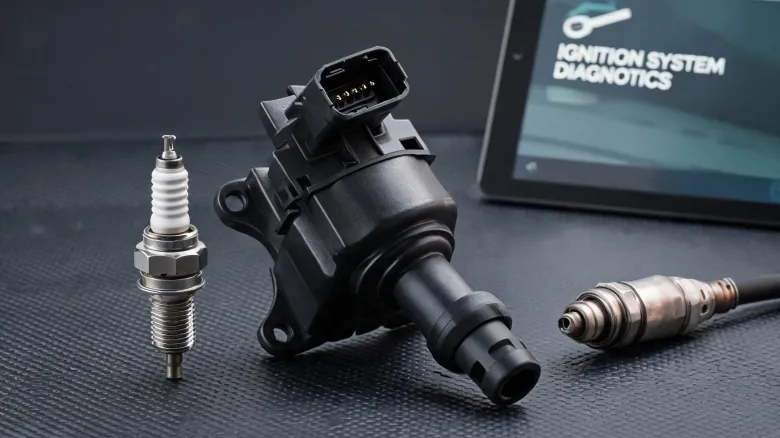
Ignition coil repair is a real fork in the road. A repair kit—boot, spring, and grease—can fix a misfire caused by a cracked boot. But if the coil body is shorted, a repair is just a delay.
From the quotes I tracked in Q4 2024, a single aftermarket ignition coil runs roughly $80–$120 (as of early 2025, prices may have moved). A full set can be $300–$600. If one coil has failed on a high-mileage engine, the adjacent coils have lived through the same heat cycles. Replacing the whole set can be cheaper than paying labor twice. If the car is older and you DIY, a single coil plus a spare might be the smarter TCO move.
Let me give you a concrete example. I had a quote for $85 for one coil and $320 for a set of four. Labor is $110 an hour at the shop down the road. If I replace one coil and the next one dies in four months, that's $85 plus $110, plus another $85 plus $110—total $390. If I replace the set now, it's $320 plus $110—and I likely avoid the comeback. That's the math I run before walking to the counter.
Here's something vendors won't tell you: the first quote is rarely the final number. Ask if ignition coil repair includes the boot kit, dielectric grease, and the connector. Ask about electrical part return policy before you buy. A no-return electrical policy turns a wrong diagnosis into a $100 paperweight. That's a hidden fee I've learned to check first.
Why is my thermostat blinking?
If you're asking 'why is my thermostat blinking,' the answer depends on whether you mean the wall thermostat in your house or the coolant temperature light in your car. Both have the same rule: diagnose the signal before replacing the part.
In a house, a blinking thermostat often means low battery, a Wi-Fi disconnect, or a system code. In a car, a blinking coolant light usually means low coolant, a bad sensor, or an overheating condition. I once ignored a blinking temp light because the gauge looked normal. Then the car died at a red light. It turned out to be a wiring ground issue, not the thermostat. The fix was $12 in contact cleaner and an hour of time. I almost replaced a part that was fine.
What most people don't realize is that the blinking light is the messenger, not the failure. If you assume it's the thermostat, you might spend $200 on parts and labor and still have the light blink. Start with the cheapest checks: battery, coolant level, sensor connector, ground strap.
This is why I keep an old thermostat housing on my desk. It helps me remember that a part with no signal isn't necessarily broken—it might just be disconnected. (I should label my desk better, but that's another story.)
How can small buyers get fair treatment from suppliers?
Here's the question nobody asked but should: what happens when you only need one small order? I've said for years that size is not the same as value. A vendor who treats a $200 order seriously is exactly who I trust with a $20,000 production run. Small doesn't mean unimportant—it means potential.
The reason I built a cost calculator was a $4,200 annual contract that looked great until hidden fees appeared. The quote said no setup fee. The invoice had a $75 setup line and a $40 processing charge. Per FTC guidelines (ftc.gov), claims have to be truthful and not misleading, but I'd rather rely on the quote than the law. Now I compare eight vendors with a simple TCO spreadsheet. Setup fees, shipping, packaging, return policy, and lead time variability go in before anything is approved.
You don't have to be a big buyer to do that. It takes ten minutes. But it's the difference between an optimal decision and a cheap one. I only believed in written quotes after skipping that step once. The verbal promise sounded good. The invoice that arrived a week later sounded worse. Now every promise goes in the same email thread, in writing.

Elise Novak
Elise Novak is an automotive braking systems analyst specializing in brake pads, discs, rotors, calipers, shoes, drums, hoses, and complete brake kits. She uses UN Regulation 90 requirements and ISO 26867 dynamometer methods to examine friction stability, fade and recovery, wear, disc thickness variation, runout, and hydraulic integrity. Her work helps distributors, quality teams, and fleet buyers compare replacement parts, verify application suitability, and define incoming-inspection criteria.