How Much Would It Cost to Replace a Catalytic Converter? Plus Champion D16 Spark Plug and Alternator Connection Lessons
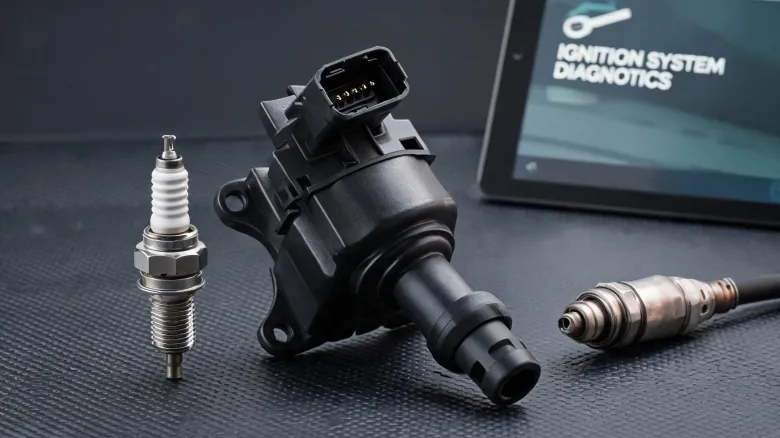
How much would it cost to replace a catalytic converter? Short answer, on an average sedan or light truck at an independent U.S. shop in early 2025: $800 to $1,800 installed with a direct-fit aftermarket converter. A universal converter can bring the total down to roughly $500–$900, while an OEM converter installed by a dealer can push past $2,500. I don't like quoting those numbers alone, because the optimal repair is not the one that gets you out the door cheapest today. It is the one you don't have to do twice.
Before I joined Optimal, I spent seven years buying parts for a fleet of about 80 vans, light trucks, and portable generators. In that time, I personally made and documented 11 significant purchasing mistakes that totaled roughly $13,000 in wasted budget. I keep the list partly out of embarrassment and partly because every mistake followed the same pattern: I picked the cheaper-looking fix over the verified one. The three comparisons below are where that pattern cost the most.
Each one has an Option A and an Option B. I chose A all three times. The checklists we use now are built from what those mistakes taught me.
Champion D16 Spark Plug: “Cross Reference” vs. the Actual Spec
Champion D16 spark plugs are not an exotic purchase. They are a routine stock item for a surprising amount of air-cooled equipment. The mistake I made was letting a supplier's cross-reference list do my thinking for me.
One year, I ordered 48 plugs that the catalog said “interchange with Champion D16.” They were 60 cents cheaper per plug, so the whole order saved about $29. I felt smart for about three days. Then a generator that had run fine for years died under load after about two hours of running on one of those plugs.
We did what frustrated people do: we blamed fuel, then the carburetor, then the ignition coil. A technician spent most of a day swapping parts before the plug came out with its center electrode overheated. The plug's heat range was not the same as the Champion D16, even though the threads and reach looked identical. The engine survived. My budget did not. Labor, unnecessary replacement parts, and a customer who lost a workday added up to $670.
Option A: buy the cheapest plug that crosses to Champion D16 and trust the box.
Option B: buy the actual Champion D16 spark plug or the exact OE part number, then verify the gap before installation.
If the specification says Champion D16, the answer is not “well, this other part is basically the same.” A spark plug number encodes thread reach, heat range, and gap. You cannot eyeball those. The five minutes it takes to verify the part is the cheapest insurance I know.
Alternator Connections: Replace the Alternator vs. Test the Wiring First
I'm not an electrical engineer, so I won't pretend to diagnose every charging system from memory. What I can tell you as the person who ordered the parts is what a 15-minute test would have prevented.
Our 2018 work van came in with a dead battery and the battery light on. The shop's first instinct—and mine—was to replace the alternator. The customer approved a new alternator and battery, a quote around $610. A week later, the van was back with the same light.
This time, someone checked voltage at the alternator's output post before touching anything. It was charging at 14.2 volts. At the battery, it read 12.4 volts. That voltage drop meant the alternator was healthy; the wiring between the alternator and the battery was not. The problem was in the alternator connections—corrosion inside a crimp on the charge wire and a loose ground strap.
We cleaned the terminals, replaced one corroded ring terminal, and installed a new connector on the charge wire. Parts cost about $18. The alternator we had already installed was unnecessary, but it was paid for.
Option A: replace the alternator because the customer said “just fix it.”
Option B: spend 15 minutes testing alternator connections, voltage drop, and ground straps before ordering anything.
Alternator connections really do have two ends: the main output stud and the small harness connector that carries the sense voltage. Corrosion at either end can make a good alternator act dead. A $20 repair beats a $600 alternator every time—but only if you check first.
Catalytic Converter Replacement Cost: Lowest Quote vs. the Cost of Doing It Twice
The question customers actually ask is, “how much would it cost to replace a catalytic converter today?” The question I should have asked is why the old one failed.
A catalytic converter usually does not die of old age on a healthy engine. It gets contaminated by oil or coolant, overheats from a rich running condition, or plugs up because a misfire keeps sending raw fuel into the exhaust. The converter is the symptom. If you replace it while the cause is still active, you are installing an expensive filter in front of the same problem.
My expensive version of this involved a 2013 work truck. It set a catalyst efficiency code, and we quoted a new converter without checking the live data. The converter was replaced. Six months later, the same code came back. That second failure finally got the diagnosis it should have gotten the first time: an intermittent misfire from a failing ignition coil. The misfire didn't show up on every test drive, so it never made it onto the work order.
The first job cost about $1,540. The coil was $85. The second converter, even with some warranty goodwill, cost us far more in labor and credibility. Checking misfire counts and fuel trims before the first quote would have changed everything.
Option A: quote the cheapest direct-fit converter and schedule the job.
Option B: spend 15 minutes reading the OBD data, fix the cause, then quote the converter.
Converter pricing depends on the vehicle, your state's emissions rules, and whether you buy a direct-fit aftermarket unit, a universal unit, or an OEM part. But the optimal converter purchase is the one made after the diagnostic work, not instead of it.
So Which Option Should You Pick?
If you are fixing a vehicle you plan to keep, or a customer's vehicle you will see again, pick B in all three cases. The A path is faster to sell and easier to quote, but it multiplies the chances of a comeback.
If the vehicle is headed to auction or being sold as-is, A might be defensible. Even then, I would document exactly what you did and did not verify, because the next owner may not be as forgiving as a fleet manager.
The checklist I now keep is boring:
- Confirm the part number and its application before ordering; no cross-reference shortcuts.
- Test voltage drop before condemning an alternator.
- Pull misfire counts and fuel trims before quoting a catalytic converter.
That short list has caught 43 potential comebacks in the last 18 months. It is not complicated. It is just cheaper than the alternative.
P.S. If you searched for the optimal temperature for a sourdough starter and landed here, you have found the automotive department of the word “optimal.” I don't keep a sourdough starter, but the bakers I trust aim for roughly 75–78°F and check it daily. Whatever you are maintaining—bread or a fleet—consistency beats guessing.

Elise Novak
Elise Novak is an automotive braking systems analyst specializing in brake pads, discs, rotors, calipers, shoes, drums, hoses, and complete brake kits. She uses UN Regulation 90 requirements and ISO 26867 dynamometer methods to examine friction stability, fade and recovery, wear, disc thickness variation, runout, and hydraulic integrity. Her work helps distributors, quality teams, and fleet buyers compare replacement parts, verify application suitability, and define incoming-inspection criteria.