Ford 6.0 Water Pump & Ignition Coil Failure: OEM vs Aftermarket Parts — What I Learned Tracking Real Costs
-
Why I Started Tracking the Full Cost Instead of the Sticker Price
-
The Comparison Framework: What I'm Actually Measuring
- Dimension 1: Upfront Cost — The Gap Isn't as Wide as You'd Think
- Dimension 2: Ignition Coil Failure — The Diagnostic Trap
-
Dimension 3: Fitment and Sourcing — Where It Actually Gets Messy
-
Dimension 4: Seasonal Temperature Management — It's Not Just the Part
-
Selection Guide: When to Use What
-
Where the Industry Is Heading — and Where It Isn't
Why I Started Tracking the Full Cost Instead of the Sticker Price
In 2019, our fleet had three 2005–2007 Ford F-250 and F-350 trucks with the 6.0L Power Stroke diesel. By early 2021, one of them blew a water pump — a known weak point on these engines. I was managing a $320,000 annual maintenance parts budget for a small fleet, which isn't huge, but it's enough to make you pay attention.
My first instinct: find the cheapest source. My second instinct — about two days too late — was to check whether "cheapest" actually meant "less expensive."
I've been comparing OEM and aftermarket parts ever since. Here's what the numbers actually showed.
The Comparison Framework: What I'm Actually Measuring
I'm not comparing shelf prices. I'm comparing total cost of ownership per 10,000 miles over a three-year window.
That means looking at two things: the part itself, and everything that happens after it fails (towing, collateral damage, downtime, and my own weekend hours).
Two vehicles, two part types, four dimensions. Here's how each one stacked up.
Dimension 1: Upfront Cost — The Gap Isn't as Wide as You'd Think
An OEM water pump for the 6.0 Power Stroke runs about $320–380. A quality aftermarket version — one with upgraded bearings or seals — comes in around $180–240. On paper, the aftermarket wins easily.
That's what I thought too. Until I made my first assumption error.
I assumed "same specifications" meant identical durability. The part numbers matched, the dimensions matched, the gasket kit matched. Why wouldn't it last?
It didn't.
What happened after 40,000 miles
The aftermarket pump I installed lasted 41,000 miles. The OEM pump in another truck went 78,000 miles before showing any weep. That's not a fluke — the aftermarket unit had a thinner cast housing and softer bearing material. You couldn't see the difference at installation. You could only see it after 40,000 miles of heat cycling.
But here's where it gets more nuanced: not all aftermarket parts lose. Some upgraded units — stainless steel impellers, for example — actually outlast OEM in specific conditions. Particularly in high-heat, high-idle environments where the OEM design has known weaknesses.
The difference isn't "OEM vs aftermarket." It's "good part vs bad part." The label on the box doesn't tell you which one you're getting.
Dimension 2: Ignition Coil Failure — The Diagnostic Trap
Now for the ignition side of things.
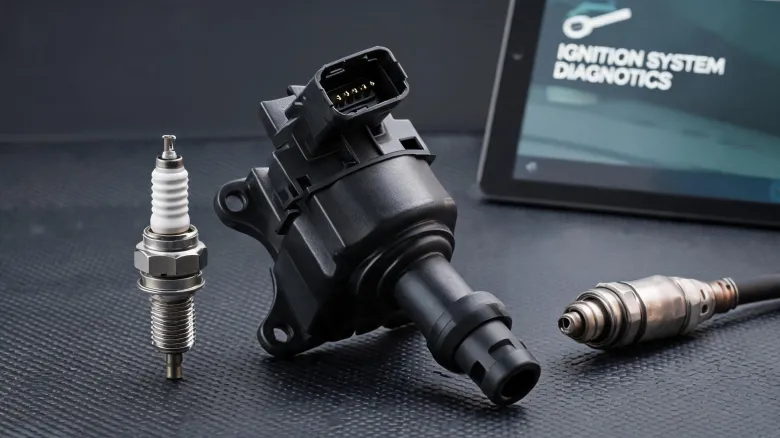
One of our trucks started misfiring. Ignition coil failure on cylinder 7. Symptoms were subtle at first — rough idle, then a noticeable stumble under load. Fuel economy dropped about 15% before I caught it.
Here's the cost breakdown: OEM ignition coils retail around $95–120 each. Quality aftermarket coils run $45–70 each, depending on the brand.
But the part price wasn't where I got burned in 2022. The diagnosis was.
The $620 mistake that taught me more than any spreadsheet
I skipped a proper diagnostic because I "knew" it was the coil. I replaced three coils before discovering the actual issue was a chafed wiring harness. Ended up paying $620 for a full ignition service that would've cost $40 in parts if I'd just paid for the diagnostic first.
The lesson: pay for the $100–150 diagnostic before you touch a single part. That's the most expensive shortcut in procurement — and I've taken it more than once.
Dimension 3: Fitment and Sourcing — Where It Actually Gets Messy
I've sourced parts from six or seven different brands. The fitment issues are real.
Take the 6.0 cooling system. The water pump gasket, thermostat housing, and bypass hose — each one has slight variations between manufacturers. Some aftermarket brands have tighter tolerances. Some are looser. On an older engine, too tight can cause stress fractures under thermal expansion. Too loose means leaks.
Six or seven suppliers, three different tolerance standards. By mid-2022, I'd added a line to our procurement policy: "Any cooling system part must include a published tolerance sheet from the manufacturer." That one sentence eliminated about half our vendor list.
The ones that remained? They're the vendors who publish actual specs — including optimal thermostat operating ranges for different seasons — not just "fits 2003–2007 Ford 6.0L."
Dimension 4: Seasonal Temperature Management — It's Not Just the Part
This one deserves its own section.
The 6.0 I mentioned earlier? It overheated in July — not because the water pump alone failed, but because three factors compounded. Summer driving at 95°F+ with a loaded trailer pushed the cooling system past its design margin. The degrading pump tipped it over the edge.
If you're running these trucks, the optimal thermostat settings for summer operation matter more than most people realize. Running a slightly cooler thermostat — 5–10 degrees below the standard opening temp — reduces the thermal load on the pump under sustained high ambient temperatures.
It's a bit like the logic behind a smart thermostat in a house: don't let the system run at max capacity when a mid-range setting gets the job done. The mechanism is different; the principle is the same.
Which raises a question I still can't answer: why do people spend $250 on a premium smart thermostat without hesitation, but balk at $40 extra for a better water pump? Both are temperature regulation problems. Both have measurable consequences when they fail. The price sensitivity is inconsistent, and I'd argue it's backwards.
Selection Guide: When to Use What
After three years and roughly $40,000 in tracked spending across six vehicles, here's how I'd break it down:
Use OEM or OEM-equivalent when:
- Component is critical to engine survival (water pump, timing components, turbo-related parts)
- Failure mode causes collateral damage — a failed water pump can warp a head
- You can't afford downtime on the vehicle
Aftermarket is acceptable when:
- Upgraded version exists with verifiable improvements (stainless impeller, reinforced bearing)
- Failure mode is non-catastrophic (sensor, bracket, non-critical belt-driven accessory)
- The cost savings exceed 30% AND you've verified the manufacturer's actual specifications
Never worth it:
- Ambiguous-source parts with no verifiable manufacturer
- Parts where the only spec is "compatible with" — no tolerances, no materials, no testing data
- Sellers who won't share failure rate data or warranty terms upfront
Where the Industry Is Heading — and Where It Isn't
What was acceptable for parts sourcing in 2018 isn't acceptable now. Ten years ago, you picked OEM or aftermarket and just hoped for the best. Now, there's enough data available — IF you know where to look — to make deliberate choices.
The vendors that are adapting: they publish tolerance data. They show failure rates at specific mileage intervals. They list operating temperature ranges alongside part numbers. The ones that aren't adapting: they're still selling on price alone.
I know which ones I'll be buying from in 2025.
But I'll also say this: I've only tracked this on Ford 6.0 engines, primarily in fleet conditions. If you're running a different platform or a one-off personal vehicle, your results may vary — sometimes significantly. The framework holds; the specific numbers don't transfer.
And one more thing: the single most valuable habit I've developed isn't any specific sourcing strategy. It's writing down what the part cost, what it should've cost, and what it actually cost after everything was said and done. The gap between those three numbers is where all the learning happens.

Elise Novak
Elise Novak is an automotive braking systems analyst specializing in brake pads, discs, rotors, calipers, shoes, drums, hoses, and complete brake kits. She uses UN Regulation 90 requirements and ISO 26867 dynamometer methods to examine friction stability, fade and recovery, wear, disc thickness variation, runout, and hydraulic integrity. Her work helps distributors, quality teams, and fleet buyers compare replacement parts, verify application suitability, and define incoming-inspection criteria.