How Do You Know If Your Catalytic Converter Is Bad? A 6-Point Checklist Before You Order Parts
-
Who Should Use This Checklist
-
Step 1: Read the Code, Then Read the Freeze Frame Data
-
Step 2: Pull a Spark Plug and Use a Spark Plug Color Chart
-
Step 3: How Do You Know If Your Catalytic Converter Is Bad? Run These Three Checks
-
Step 4: Check the Thermostat Before You Blame Summer Heat
-
Step 5: Check the CV Axle Boots While the Car Is in the Air
-
Step 6: Verify the Part Number and Supersessions Before You Order
-
Common Mistakes I Still Catch Myself Making
-
When to Stop and Call a Specialist
Who Should Use This Checklist
You just got a check-engine light. The code says P0420, which means catalyst efficiency is below threshold. Maybe a shop already quoted you for a catalytic converter, or you are halfway through ordering one online. Before you spend that kind of money, run this six-point checklist.
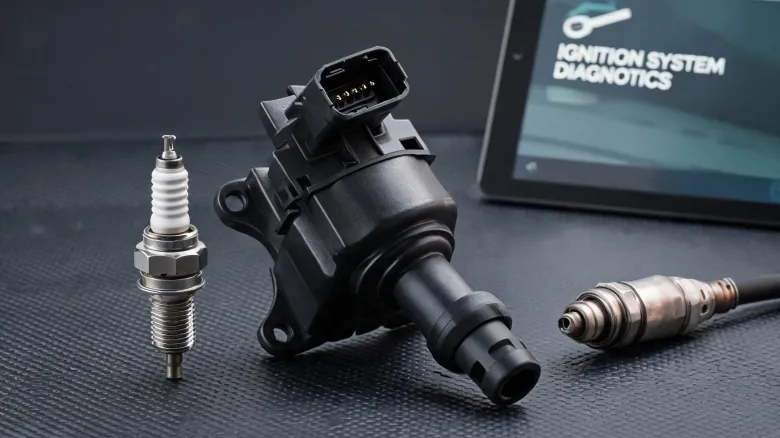
I ran a two-bay repair shop in Queen Creek, Arizona, from 2018 to 2022. In my second year, I ordered a catalytic converter for a Chevy Equinox with a P0420. Two weeks later, the light came back. The converter wasn’t bad. A worn ignition coil and a fouled spark plug had been misfiring long enough to poison the new catalyst. The second converter came out of my own pocket, and the whole lesson cost me about $1,040 once you count the plugs and the customer discount.
That was one of fourteen diagnostic mistakes I documented before I started following a set order. Roughly $8,600 in wasted parts, returns, and rework later, I moved into technical support at optimal, an automotive parts manufacturer doing stamping, forging, CNC machining, and aluminum extrusion for OEM and aftermarket customers. Part of my job is reviewing returned parts. The same pattern shows up every month: someone ordered the right part, but they ordered it before actually diagnosing the failure.
Bottom line: a P0420 is a symptom, not a diagnosis. This checklist takes about thirty minutes total and has stopped me from ordering a lot of parts I didn’t need.
Step 1: Read the Code, Then Read the Freeze Frame Data
P0420 means the downstream oxygen sensor isn’t seeing enough of a difference between what the engine is putting out and what is exiting the catalytic converter. It doesn’t tell you the converter is bad. It tells you the system isn’t cleaning the exhaust the way it should.
So pull up the freeze frame data on your scan tool before you order anything. I’m looking for two numbers specifically:
- Coolant temperature. If the engine was fully warmed up and the freeze frame shows coolant temp below 185°F, something is keeping the engine too cold. That points to a stuck-open thermostat, which is Step 4 of this list.
- Long-term fuel trims. If they are sitting above roughly +10%, the engine is running lean and the computer is adding fuel to compensate. That usually means a vacuum leak, exhaust leak, or MAF sensor problem, not a dead converter.
Write those numbers down, then ignore the code for a few minutes and keep moving through the list. Do not order a converter until Steps 2 through 4 are crossed off.
Step 2: Pull a Spark Plug and Use a Spark Plug Color Chart
Nothing kills a catalytic converter faster than a misfire. Raw fuel flows into the converter, lights off inside the brick, and the heat destroys the coating. That is likely what killed the original converter. If you replace it without fixing the misfire, you will probably kill the new one too.
Pull the plugs and compare them to a spark plug color chart. You can find one free online, but here is what matters:
- Light tan or gray — normal combustion. Move on.
- Dry black soot — running rich or misfiring.
- Black and oily — oil is getting past the rings or valve seals.
- White or blistered — running lean, or the engine is overheating badly.
The one I remember most clearly was an Equinox that was not throwing a misfire code yet. I assumed the catalyst was just old. Turned out the spark plug had a cracked porcelain insulator and the coil boot was arcing to the cylinder head. The misfire was there all along, just not strong enough to set a code. Looking back, a spark plug check would have caught it before the first converter, not the second. That was the mistake that made me print a spark plug color chart and tape it to my toolbox.
If your plugs show soot, oil, or blistered porcelain, fix the root cause first. Clear the code, drive it for a week, and see if the catalyst monitor comes back clean before you buy anything.
Step 3: How Do You Know If Your Catalytic Converter Is Bad? Run These Three Checks
So, how do you know if your catalytic converter is bad? A code alone can’t answer that. A bad converter usually shows one of three personalities: rattling, plugged, or not converting. Here is how to test each one in your driveway or on a lift.
- Tap test for a broken brick. Lightly tap the converter shell with a rubber mallet after the car has cooled down. If you hear something rattling inside, the honeycomb material has broken apart. That converter needs to be replaced.
- Temperature test for conversion. Warm the engine up, hold it at fast idle around 2,000 rpm for a couple of minutes, then point an infrared thermometer at the inlet and outlet shells of the converter. If the outlet is meaningfully hotter than the inlet, typically 100°F or more, the converter is doing its job. If the outlet is about the same temperature or cooler, the chemical reaction isn’t happening. That is a strong sign the catalyst is finished.
- Backpressure test for a plugged converter. If the car feels down on power and the inlet shell seems scorching hot while the outlet stays cool, the brick may be physically clogged. Remove the upstream oxygen sensor, thread in an exhaust backpressure gauge, and run the engine at 2,500 rpm. A healthy exhaust system should stay under roughly 1.5 to 3 psi. If the gauge climbs higher than that, the converter or muffler is restricting flow.
According to the EPA, a properly functioning catalytic converter cleans up about 90 percent or more of the engine’s hydrocarbons, carbon monoxide, and nitrogen oxides. That is why this part matters for more than just passing inspection. But if your converter passes the tap test and the temperature test, replacing it won’t fix the code. Keep looking upstream.
Step 4: Check the Thermostat Before You Blame Summer Heat
If you found this article while searching for “optimal thermostat settings summer,” here’s the short version: most of those results are about home air conditioning, but the car version of the question is simpler than people make it. Your engine has a target coolant temperature range, and the thermostat’s job is to hold the engine there.
On most modern cars, that range is roughly 190°F to 220°F depending on the engine. That is the optimal thermostat setting in summer, in winter, and everywhere in between. A car does not have a dashboard dial for coolant temperature, and putting in a lower-temperature “racing” thermostat to cope with July heat is usually a mistake. If the engine runs too cool, the computer keeps it in open-loop mode longer, the fuel mixture runs rich, fuel economy drops, spark plugs foul, and the catalytic converter ends up working overtime.
Here is the check most people ignore: connect a scan tool, drive the car for fifteen minutes, and watch the coolant temperature reading. If it stays below about 185°F on a warm engine, the thermostat is stuck open. If it climbs past 230°F and keeps rising, the thermostat may be stuck closed, or the cooling fan, radiator, or water pump isn’t keeping up.
A stuck-open thermostat is one of those sneaky causes of a P0420 code. The engine never fully warms up, so the converter never works at peak efficiency, and the downstream oxygen sensor eventually flags it. Fix the cooling system first, clear the code, and see what comes back before you order a converter.
Step 5: Check the CV Axle Boots While the Car Is in the Air
While the car is on the lift and you’re already looking at the underside, take ninety seconds to inspect the CV axle boots. This has nothing to do with a P0420, but it will save you an awkward second phone call later.
A torn CV boot throws grease around the inside of the wheel well and lets dirt work its way into the joint. If you catch it early, you can replace the axle before it starts clicking. If you wait until you hear clicking in sharp turns, the joint is already losing its bearings and the axle needs to be swapped.
If you would rather have a specialist handle it, look for a CV axle shop that asks for the VIN and the axle’s original part number instead of just year, make, and model. Axle length and ABS tone ring placement can vary between trim levels, and that is exactly how people end up with a part that almost fits.
Step 6: Verify the Part Number and Supersessions Before You Order
Once the diagnosis is actually confirmed, don’t order parts by memory. Get the VIN, get the original equipment part number, and check for supersessions. Manufacturers change part designs, and the original part number you find online may have been replaced twice.
One reason I know this from the inside is that I work with purchasing teams and engineers who log into the optimal portal regularly. The first thing they check is the supersession history and the fitment notes. That same discipline applies no matter which manufacturer you buy from. If the supplier doesn’t ask for your VIN or doesn’t show you a supersession note, slow down.
On exhaust parts, confirm the number of oxygen sensor bungs and the pipe diameter before you order. On CV axles, confirm the length and the ABS tone ring. On thermostats, confirm the temperature rating matches what the factory specified. Ten minutes of verification beats a return shipping label every time.
Common Mistakes I Still Catch Myself Making
Even with a checklist, the shortcuts sneak back in. Here are the ones I have to watch:
- Trusting the first code without checking freeze frame data. A P0420 with a cold engine on the data screen is an invitation to check the thermostat, not order a converter.
- Skipping the spark plugs because the car “hasn’t misfired.” Intermittent misfires rarely set a flashing light until they get severe. When in doubt, pull the plugs.
- Chasing a summer overheating complaint with a cooler thermostat. The cooling system is not the thermostat’s fault. Find out why the radiator isn’t doing its job.
- Waiting on a torn CV boot until it clicks. A replacement axle costs about the same either way. The difference is whether you also need a tow.
When to Stop and Call a Specialist
I’m not a master technician, and I’m not an emissions engineer, so I can’t speak to every state’s CARB versus EPA converter rules or the legal requirements for OEM-grade parts in your county. What I can tell you from a parts and warranty perspective is that misdiagnosis is the number one reason good parts come back.
This checklist was accurate as of early 2025, but emissions regulations and diagnostic procedures evolve. If you don’t own a scan tool that shows live data, or you’re not comfortable tapping on a hot exhaust system, find a reputable shop and ask them to run these checks before quoting replacement parts. There’s no shame in paying for an hour of diagnosis. It is still cheaper than replacing two catalytic converters.

Elise Novak
Elise Novak is an automotive braking systems analyst specializing in brake pads, discs, rotors, calipers, shoes, drums, hoses, and complete brake kits. She uses UN Regulation 90 requirements and ISO 26867 dynamometer methods to examine friction stability, fade and recovery, wear, disc thickness variation, runout, and hydraulic integrity. Her work helps distributors, quality teams, and fleet buyers compare replacement parts, verify application suitability, and define incoming-inspection criteria.