Why the 'Optimal Product' Still Fails: What I Learned From 8 Years of Sourcing Automotive Parts
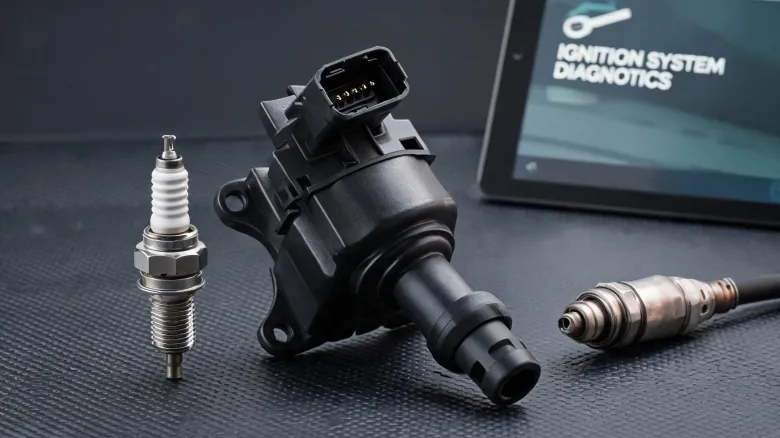
If you've ever searched for the 'optimal product' on a spec sheet, checked the flow rate, torque spec, or temperature range, and then watched it fail in the real world, you know the feeling. It should have worked. The numbers said so. And yet the part didn't fit, didn't last, or didn't behave the way the datasheet promised.
I'm a sourcing engineer at Optimal, and for the last eight years I've handled custom automotive stamping parts, stamping dies, CNC machining, forging, and aluminum extrusions. I've personally made (and documented) 23 significant selection mistakes, totaling roughly $64,000 in wasted budget. Now I maintain our team's checklist so other people don't repeat them. The common thread wasn't bad parts. It was treating 'optimal' as a property of the part instead of a relationship between the part and the application.
The 'Optimal Product' Is Not a Universal Label
Take the Walbro 450 fuel pump. It's a popular choice for high-horsepower E85 builds, and it moves a lot of fuel. But if you drop it into a near-stock E36 without upgrading the wiring and modifying the hanger, you can create new problems: pump noise, heat soak, and voltage drop. The pump is fine. The 'optimal product' for that specific vehicle isn't the biggest-flow pump you can find; it's the pump matched to the fuel system's pressure, temperature, and electrical limits. (Should mention: I'm not knocking the Walbro here. I've seen it work exactly as intended in cars that needed that flow.)
Same with the E36 crankshaft position sensor. You'd think buying the most expensive sensor is the safe route. But the failures I've seen on old BMWs are rarely the sensor itself. It's the connector terminal tension, the wiring shield, or the air gap at the crank trigger wheel. A brand-new sensor with the wrong gap or a brittle connector can still set the same fault. The question isn't 'which sensor is best?' It's 'what fails first in this engine bay, at this age, with this wiring?'
The Deeper Problem: Context, Not Specs
Most buyers focus on the obvious factors—brand, price, headline specs—and completely miss the constraints that decide whether those specs hold up. That blind spot is where most of my mistakes live.
For a stamped part or a CNC bracket, the same geometry can be optimal for one manufacturing process and terrible for another. A hole that's easy to machine is not necessarily easy to stamp. A radius that looks fine in CAD can produce springback on the press. A material that meets the strength spec can create burrs that interfere with the sensor mount. If you choose a design without checking the manufacturing context, you aren't optimizing; you're guessing. At least, that's been my experience in automotive sourcing—and in the 18 months since we started validating that context, we've caught 47 potential issues before they became scrap.
The same logic is everywhere. When people search 'optimal thermostat settings winter,' they usually want one number. But the right setting depends on insulation, HVAC curve, and schedule. And the honest answer to most 'heat pump vs tankless water heater' questions is 'it depends'—on climate, fuel price, and daily demand. A universal answer without context is not engineering; it's marketing. That's not a cop-out. It's the difference between selecting a product that looks good on paper and selecting one that will work in the real system.
What My Mistakes Taught Me (The Expensive Way)
In my first year, I made the classic spec-sheet error. I approved a stamped sensor bracket based on the CAD model. The hole tolerance looked fine on my screen. I didn't verify whether the die we were building could hold it consistently. The first 500 pieces came back with burrs that interfered with the sensor body. We caught it in final inspection. $720 in redo, a one-week delay, and a very quiet design review. I want to say the year was 2021, but I might be off by a month or two; the PO number and the lesson are still stuck in my head.
I only believed in design-for-manufacturing validation after ignoring it and eating that cost. My first instinct was to blame the vendor. The vendor was right: they built exactly what we asked. The print was impossible to hold consistently. I had chosen an 'optimal' bracket on paper that nobody could actually make.
Then there was the fuel pump episode. I assumed a Walbro 450 would drop into the E36 fuel hanger with just a small adapter. Didn't verify the wiring or the pump depth. Turned out the connector style was different and the pump sat too low in the bucket. The pump itself was fine. The selection was wrong. That one set me back about $1,100 including replacement parts and expedited shipping. A red flag I should have seen earlier: the supplier's own datasheet said 'retrofit kit required,' and I ignored that line because the main flow number looked like a no-brainer.
The scary part is that these weren't exotic cases. They were parts with perfectly good spec sheets. By the time I logged mistake #23, I had a different definition of 'optimal product': it's the part that survives the intersection of specs, manufacturing reality, and field conditions. Take away any one of those, and the label is just a guess.
What I Check Now (Short Version)
Here's the checklist I now use on production parts. It's not fancy, and it's not a substitute for real validation, but it has saved us more than once.
- Define the operating envelope before choosing a part. Pressure, temperature, duty cycle, space, connector style, wiring limits. The headline spec is only one of them.
- Select or design with the process in mind. For stamped parts, that means checking radii, tolerances, material, and die access. For sensors, it means checking connector, gap, and heat exposure.
- Ask 'what's the failure mode?' and test for that one—not the mode the datasheet is designed to show.
- Check physical installation on a sample, not just on a screen. A bracket that clears in CAD can still hit a harness in the car.
- Ask suppliers 'under what conditions did you measure this?' If they can't answer, that's a deal-breaker.
I recommend this for production parts and anything you're likely to reorder. But it's not for every situation. If you're making a one-off prototype for a show car, this full checklist will slow you down; half of it is overkill. The process is worth the cost only when a bad part gets multiplied by hundreds or thousands. In a small-volume project, the opposite trade-off can be the smart one.
Bottom line: the 'optimal product' is not a line on a datasheet. It's a fit between the part, the process, and the problem. Once you stop looking for a universal best answer and start asking 'best under what conditions?' you'll avoid the exact mistakes I kept making for years. Take it from someone who had to pay for them twice.

Elise Novak
Elise Novak is an automotive braking systems analyst specializing in brake pads, discs, rotors, calipers, shoes, drums, hoses, and complete brake kits. She uses UN Regulation 90 requirements and ISO 26867 dynamometer methods to examine friction stability, fade and recovery, wear, disc thickness variation, runout, and hydraulic integrity. Her work helps distributors, quality teams, and fleet buyers compare replacement parts, verify application suitability, and define incoming-inspection criteria.