What 'Optimal' Actually Means in Automotive Parts Buying (Transmission Temp, Strut Bushings, Spark Plugs, Headlights)
-
How I Learned This
-
Optimal Transmission Temperature: It's Not One Number
-
Strut Bushings: The Part That Doesn't Get Enough Respect
-
Spark Plug Function: Simpler Than People Make It
-
Can You Get Pulled Over for One Headlight Out?
-
What 'Optimal' Means for a Supplier (and a Logo)
-
When Not to Chase 'Optimal'
No single 'optimal' transmission temperature, strut bushing, spark plug, or headlight-law answer covers every vehicle. What's optimal is the part that matches the vehicle's OEM specification and the supplier that can prove it. The company logo—even if it says 'Optimal'—does not change spark plug function or strut bushing performance.
The best procurement decision is the one where the spec, the application, and the paperwork all line up.
I'm not an engineer. I'm the office administrator who handles purchasing for a 45-person automotive repair and parts company. I manage roughly $250,000 in annual ordering across eight vendors, and I report to both operations and finance. I've processed more than 300 orders over the past five years, and I've made enough mistakes to have a healthy respect for 'optimal' as a word.
How I Learned This
Here's the thing: I don't turn wrenches. But I have to talk to people who do. When I first took over purchasing in 2020, I thought the cheapest quote was the optimal choice. It took one bad batch of 400 strut bushings to change my mind.
The new vendor was 18% cheaper than our regular supplier. They sounded great on the phone. But they sent a handwritten invoice, finance rejected the expense report, and the bushings didn't match the sample dimensions. I ate $860 out of the department budget. (Note to self: if a vendor can't produce a proper invoice, they won't produce proper traceability either.)
When I compared our Q3 and Q4 orders side by side—same part, different suppliers—I finally understood why specs matter more than price. The 'cheap' bushings were the same material but had a different durometer. They were harder, which meant they transmitted more road noise. In a repair shop, that comes back as a complaint.
Optimal Transmission Temperature: It's Not One Number
If you Google 'optimal transmission temperature,' you'll get several answers. The common rule for many automatic transmissions is about 175°F (80°C) under normal driving. Some newer CVTs and heavy-duty trucks run hotter by design. The real alarm starts at around 240°F sustained, where ATF oxidation accelerates. But that's a rough guideline, not a universal spec. As of 2025, every OEM service manual I've seen has its own operating range.
What practical difference does that make for a buyer? When our shop ordered a transmission cooler kit, the supplier tried to sell us a smaller unit because the catalog said it was 'optimal.' I asked for the pressure-drop data and the temperature range for towing. The smaller unit would have been fine for commuting, not for our fleet's trailers. Paying an extra $65 for the larger cooler was the right call. The numbers said one thing; my gut said the application mattered more. Turns out the gut was right—after 3 hours of towing, the smaller unit would have been borderline.
Strut Bushings: The Part That Doesn't Get Enough Respect
The strut bushing sits between the strut's upper mount and the chassis. Its job is to absorb small vibrations and keep the strut shaft aligned so the coil spring doesn't bind. When worn, you get a clunk over bumps, vague steering, and a tire-wear pattern that makes a tire shop suspect an alignment problem. The fix is straightforward: replace struts, bushings, and mounts together.
Most buyers focus on the strut itself and completely miss the bushing. I've done it. A bushing looks like a rubber donut, and it's easy to assume any generic part will work. From the outside, it looks like rubber is rubber. The reality is that durometer (rubber hardness) and sleeve alignment matter. A slightly oversized bushing can cause a groaning noise in cold weather, and nobody wants to redo that job.
The question people ask is 'which brand has the best strut bushing?' The better question is 'does this bushing meet the OEM spec for the vehicle if the strut is exactly the same?' Brand name and package design aren't listed in the service manual. The part number alone is optimal when it matches the application and the quality documentation.
Spark Plug Function: Simpler Than People Make It
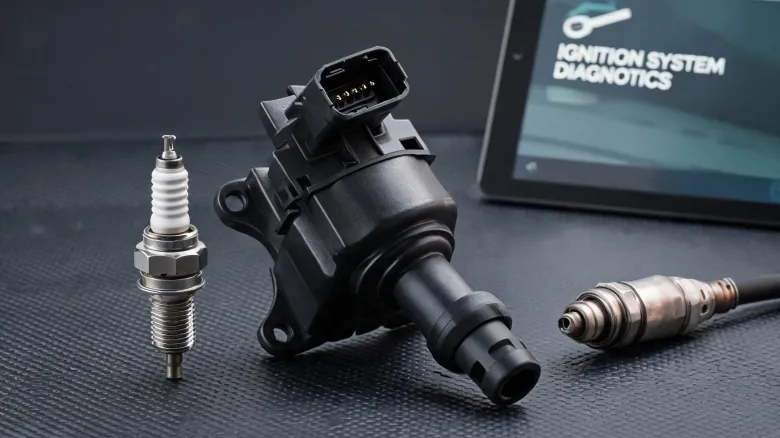
The spark plug function is to ignite the compressed fuel-air mixture. That's it. The plug's heat range, gap, and reach must match the engine's combustion chamber. A spark plug that's too cold fouls. A plug that's too hot causes pre-ignition. If you're buying spark plugs for a fleet, don't let marketing talk you into a 'performance' plug when a standard OE-type plug is the correct choice.
Why does this matter in procurement? Because I once bought 96 spark plugs based on a supplier's claim that their plug was 'better than OEM.' It had a different electrode design. The techs told me the gap was pre-set but not correct for our vehicles. We had to regap every plug, which added two hours of labor. The supplier's logo didn't affect spark plug function; the specified gap did.
Real talk: if you're wondering whether a spark plug is 'optimal,' check the vehicle's owners' manual or repair database for the exact part number and heat range. The manual doesn't care about your favorite brand.
Can You Get Pulled Over for One Headlight Out?
Yes. In most U.S. states, a vehicle must have two functioning headlights during darkness. Federal Motor Vehicle Safety Standard 108 requires two headlamps on passenger vehicles, and state vehicle codes, like California Vehicle Code 24250, require those lamps to be lit. You might receive a fix-it ticket instead of a fine, but being pulled over is still a hassle and a risk.
The practical procurement version: headlight bulbs are not a place to go cheap. We stock two part numbers for the most common bulbs in our fleet. We don't buy 'off-brand' bulbs unless they show the same DOT or SAE marking. A bulb might look the same, but the beam pattern can be off, and that's both a safety and legal issue. Under FMVSS 108, the headlamp must meet photometric requirements. The logo isn't the spec.
What 'Optimal' Means for a Supplier (and a Logo)
When people search for 'optimal' or 'optimal logo' in this industry, they're usually trying to verify whether a part or supplier is legitimate. I'll be blunt: a logo is a branding element, not a quality certificate. In automotive stamping, dies, CNC machining, forging, and aluminum extrusions, that's especially true. A nice website and a nice stamp don't guarantee tolerances.
After five years of supplier management, I've come to believe that 'optimal' is highly context-dependent. A one-stop supplier with multi-process capabilities—stamping plus dies, CNC, forging, extrusion—saves us from managing six different vendors. But it's not always the best fit for a low-volume specialty part. The right supplier is the one who answers the engineering questions honestly and provides material certs, PPAP files, and a clean invoice. Those are the things you can measure. The logo isn't one of them.
The industry is evolving too. What was considered good supplier practice in 2020—phone quotes and static catalogs—is shifting toward digital traceability and integrated quality data. The fundamentals of material quality haven't changed, but the execution has transformed. That's a good thing.
When Not to Chase 'Optimal'
The word 'optimal' should be used carefully. It's not absolute. If you're building a one-off prototype, the optimal manufacturing process might be CNC machining even if stamping would be cost-effective at a 50,000-piece volume. If a customer asks about a transmission temp alarm, don't recommend a universal temperature without checking the OEM cold-clutch strategy. If you're replacing one headlight bulb because the other one is old, go ahead and replace both—that's optimal practice.
The boundary condition: if you have no documentation, no spec, and no application context, 'optimal' is just a marketing term. Verify current regulations, confirm OEM recommendations, and ask for the data. Then you can decide.

Elise Novak
Elise Novak is an automotive braking systems analyst specializing in brake pads, discs, rotors, calipers, shoes, drums, hoses, and complete brake kits. She uses UN Regulation 90 requirements and ISO 26867 dynamometer methods to examine friction stability, fade and recovery, wear, disc thickness variation, runout, and hydraulic integrity. Her work helps distributors, quality teams, and fleet buyers compare replacement parts, verify application suitability, and define incoming-inspection criteria.