The Cheapest Quote Is the Most Expensive Part You'll Ever Buy
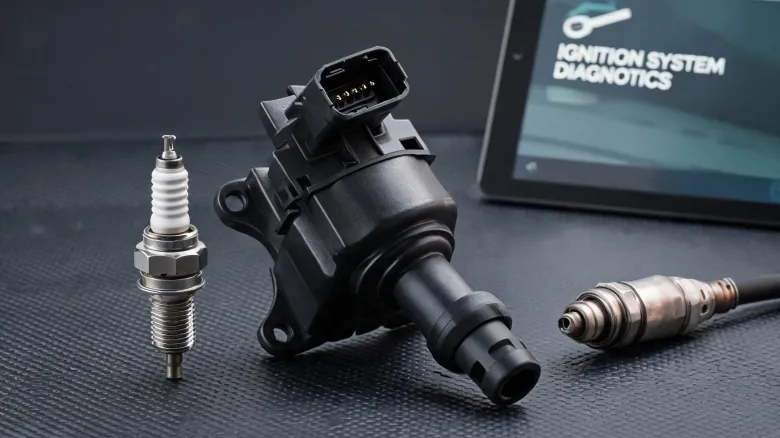
Let me save you a costly mistake: the cheapest quote is the most expensive part you'll ever buy.
I'm the quality and compliance manager at Optimal, an automotive components manufacturer. I review parts before they ship and before we accept them from vendors—roughly 40 to 50 unique parts a week, every week, for over four years. In 2024, I rejected about 9% of first deliveries from lower-cost vendors due to out-of-tolerance dimensions, wrong material grades, or skipped heat treatment. In nearly every case, the buyer made the same mistake: they compared unit prices instead of total cost of ownership.
I'm not going to soften this. If you're sourcing automotive parts by unit price alone, you're not saving money—you're deferring cost. The invoice just lands later, and it lands higher.
Stop Looking for "Optimal" in the Wrong Place
Everyone wants the optimal answer. You'll see entire threads dedicated to the optimal temperature for sourdough starter (it's around 75°F, not that I'm a baking expert—I just fell down that rabbit hole during a rainy weekend). But in automotive manufacturing, "optimal" means something more concrete: the lowest total cost of ownership (TCO) that still meets your specifications, timeline, and reliability target.
Here's how I calculate TCO before comparing any quotes:
- Unit price
- Tooling and setup costs
- Shipping and expedite risk
- Incoming inspection effort
- Expected field failure rate
- Cost of rework, replacement, and line downtime
Most buyers stop at line one.
Put another way: TCO = price + risk + time. And time is never zero.
A $500 Quote That Turned Into an $800 Lesson
Earlier this year, a procurement contact asked me to weigh in on two quotes. They needed a stamped heat shield assembly for a muffler and catalytic converter on a light commercial vehicle. One stamper quoted $500 per batch. We quoted $650. The $500 shop got the PO.
Two weeks later, the batch arrived with edge wave on the stamped bracket, a mating surface that didn't meet flatness spec, and a missing anti-corrosion coating on one leg. My team flagged all three. The buyer sent it back, waited for a rework, and paid expedited freight to hold the production schedule.
Final cost: roughly $800, plus a two-week delay. And that's before valuing the line downtime.
The $650 quote was, by every honest calculation, the cheaper option.
This isn't a story about our quote winning. It's a story about what happens when unit price makes the decision and TCO doesn't get a seat at the table.
The $0.80 Part That Cost $800
A flywheel key is a small part that locks the flywheel to the crankshaft of a small engine. Its unit price is negligible—less than a dollar for many part numbers. But when a flywheel key is made from the wrong grade of steel, or the heat treatment is skipped, the key shears. The flywheel shifts, engine timing goes wrong, and a $0.80 part becomes an $800 repair.
I rejected a batch of flywheel keys in early 2024 from a lower-cost supplier. Hardness readings came in 12 to 15 points below spec on every sample. The vendor argued it was "within industry standard." It wasn't within our spec—and "industry standard" is not a specification.
The buyer had to re-source and eat the delay. The "cheap" keys ended up being anything but.
The 2-Row vs. 3-Row Radiator Question
I hear the 2-row vs 3-row radiator question constantly. It's an easy comparison to ask: two rows or three, which is better? It feels concrete—surely the higher number wins.
It doesn't.
The right question is about cooling capacity under your operating conditions. A 2-row radiator with a well-designed core and tight fin density can outperform a 3-row unit with a cheaper, lower-efficiency core. Row count is a construction detail, not a performance guarantee. It's one variable in a thermal calculation, not the answer by itself.
The same logic applies to every part we source: the "more" option isn't automatically the better option. The right option is the one that meets the requirement with the lowest total risk-adjusted cost. If that happens to be a 2-row radiator, no amount of 3-row hype should change your mind.
(And if a supplier can't explain why their design meets your needs—beyond "it's got more rows"—that's a red flag.)
What I Check Before Any Price Comparison
I'm not a procurement specialist, so I can't speak to every RFQ strategy. But from a quality perspective, three things matter before unit price gets to say anything:
- Process credentials. Does the vendor's manufacturing process actually produce the required characteristics? Is that muffler assembly using continuous MIG welds where the design calls for them, or spot welds that look fine in photos but fail at 40,000 miles?
- Inspection traceability. Can they produce batch-level dimensional reports, material certs, and hardness data? Under IATF 16949, automotive suppliers are expected to maintain that documentation. If they can't show it, the system isn't working.
- Deviation handling. If a part falls out of tolerance, do they flag it before shipping, or does it arrive at your dock hoping nobody checks?
And here's a practical test: when a supplier gives you portal credentials, the optimal login experience gets you to inspection reports and material certs in under a minute, without digging through menus. If you can't find the paperwork quickly, assume it doesn't exist.
But My Budget Says Otherwise
I hear this every quarter. Budget pressure is real, and I'm not going to pretend otherwise.
That said, the purpose of a budget is to keep a project alive while delivering a working product—not to buy the lowest-priced parts on principle. Those are different objectives. This isn't a moral argument; it's arithmetic. If a part fails at 2% and your line stops when it fails, the "savings" from a cheaper supplier vanish fast.
If you can't afford quality parts, you definitely can't afford to buy the same part twice.
Optimizing for the Long Run
After four years of reviewing parts, I can tell you that the cheapest path and the optimal path are rarely the same path. I've made this mistake myself—early in my career, I pushed for a low-cost tooling vendor and spent a quarter explaining schedule slips. The lesson stuck.
The optimal choice is the one that keeps your line running, your warranty claims low, and your customers calling back. It's almost never the one with the smallest number on the purchase order.
That's why our name exists. Optimal is the referee between "the cheapest option" and "the best option." We quote with TCO in mind: tooling, process controls, inspection data, and risk. We don't win every quote. But the ones we do win share one thing in common—the total cost story was honest.
Stop buying parts. Start buying outcomes.
That's my opinion, and four years of reviewing rejects has only made it stronger.

Elise Novak
Elise Novak is an automotive braking systems analyst specializing in brake pads, discs, rotors, calipers, shoes, drums, hoses, and complete brake kits. She uses UN Regulation 90 requirements and ISO 26867 dynamometer methods to examine friction stability, fade and recovery, wear, disc thickness variation, runout, and hydraulic integrity. Her work helps distributors, quality teams, and fleet buyers compare replacement parts, verify application suitability, and define incoming-inspection criteria.