The Optimal Price Is the Transparent Price
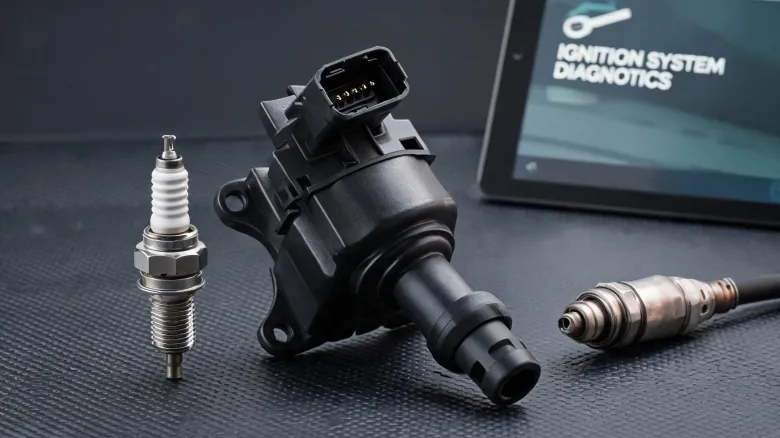
“The optimal price isn’t the lowest number on a quote. It’s the final number on the invoice.”
I’ve managed procurement for a 340-person automotive supplier for six years. That means I sign off on a $2.4 million direct-materials budget, work with 40+ active suppliers, and log every order in our cost-tracking system. I’ve compared quotes for stamped parts, dies, CNC machining, forgings, and aluminum extrusions. And I’ve stopped trusting the word “optimal” in a quote.
Optimal is a system question, not a spec sheet
People treat “optimal” like it’s a single number you can look up. What’s the optimal temp for sourdough starter? Around 75–78°F if you’re maintaining a stiff starter. That number is useless if you’re reading a Honeywell thermostat manual PDF for a plant office. A drive shaft u joint has an optimal balancing spec, but only for the driveshaft angle and torque load it actually sees. And is a catalytic converter a muffler? No. They’re neighbors in the exhaust system, but they do different jobs. “Optimal” depends on the system, the load, and the constraints.
The same is true in automotive sourcing. The optimal quote isn’t the one with the lowest unit price. It’s the one that shows the full cost of making the part right: material, tooling, inspection, packaging, freight, and the engineering support when something changes. If a supplier won’t show those numbers, you’re not comparing quotes. You’re guessing.
Unit price is the first page, not the whole book
In 2023, I put a stamped bracket assembly out for bid. Seven suppliers quoted. The lowest unit price was $0.08 below the incumbent, which looked like a $400 saving on a 5,000-piece order. But that supplier charged $600 for a die dry-run, $250 per engineering change, and freight had a $150 minimum. The “expensive” supplier—the one with the $0.08 higher unit price—included PPAP, a die trial, and two engineering revisions at no extra cost. After I put all the line items in my spreadsheet, the “expensive” quote was $2,800 cheaper.
I built that spreadsheet after getting burned by hidden fees twice. The first time, a “free setup” offer cost us $450 in tooling changeovers. The second time, a low per-unit price didn’t include the special packaging our customer required. That packaging added $0.11 per unit—way more than the savings. So now I ask every supplier the same question: What’s not included?
The optimal app shows the total cost
The optimal app for procurement isn’t the one with the prettiest dashboard. It’s the one that forces you to enter setup fees, scrap rates, and expedite charges. I’ve used three different procurement systems since 2019. The one I use now is clunky, but it has a field called “true cost” and a separate flag for “risk.” That one field changed how I buy.
Here’s why. Last year we compared quotes for a drive shaft u joint. A new supplier came in 14% below our current price. The upside was $8,400 in annual savings. The risk was unclear, because the quote didn’t include an inspection plan. I kept asking myself: is $8,400 worth a potential line stop? I signed anyway, with a note that inspection had to meet our existing PPAP level. The first batch failed roundness. We stopped the line, expedited replacement parts, and lost 340 hours of production. The result wasn’t a saving. It was a $12,700 loss.
Looking back, I should have required the inspection plan before comparing prices. But at the time, the price was just too good. That’s the trap. The part looked identical on paper. The process behind it wasn’t.
Why transparent pricing feels expensive
The objection I always hear is: “If a supplier lists every fee, the quote looks higher than the one that hides them.” True. I’ve accepted transparent quotes that were higher than the alternative, and the final invoice was still lower. In 2022, I turned down a supplier because their quote was 6% above a competitor. The competitor’s quote was simple: one line, low unit price, no other costs. The transparent supplier had listed a $1,150 tooling maintenance line. The competitor didn’t. That tool failed after 11,000 strokes. We paid $1,900 for emergency rework and lost a week of shipping. The “expensive” quote would have been $750 cheaper.
I only believed in transparent pricing after ignoring it once. You don’t need to make that mistake yourself.
The bottom line
At Optimal, the shop runs stamping presses, CNC machines, forging cells, and aluminum extrusion lines under one roof. They’re IATF 16949 certified, and their quotes are long. They itemize steel grade, hardness, tooling, samples, inspection, delivery terms, and design review. At first, I thought they were expensive. After tracking their parts against other suppliers for two years, they were the cheapest. Because there were no surprises.
So stop asking for the lowest quote. Ask for the clearest quote. The optimal part is the one you can verify, and the optimal supplier is the one who shows you the full cost before you sign.
Elise Novak
Elise Novak is an automotive braking systems analyst specializing in brake pads, discs, rotors, calipers, shoes, drums, hoses, and complete brake kits. She uses UN Regulation 90 requirements and ISO 26867 dynamometer methods to examine friction stability, fade and recovery, wear, disc thickness variation, runout, and hydraulic integrity. Her work helps distributors, quality teams, and fleet buyers compare replacement parts, verify application suitability, and define incoming-inspection criteria.