Optimal Thermostat Settings, Bad Catalytic Converters & the Customer Flywheel: A B2B Buyer's FAQ
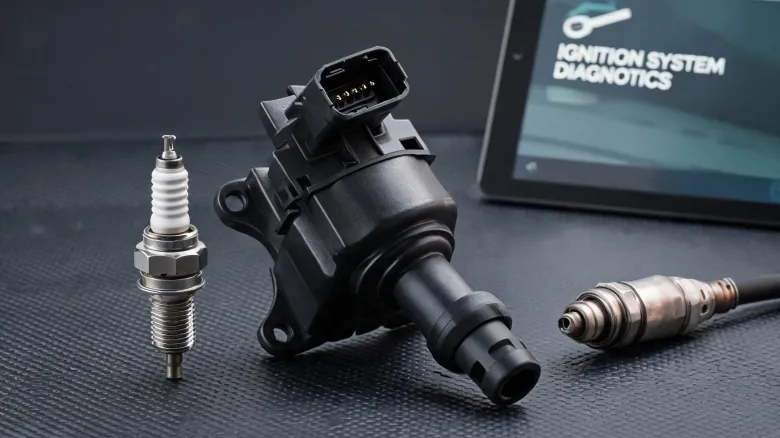
I work at Optimal, an automotive components supplier. We make stampings, dies, CNC-machined parts, forgings, and aluminum extrusions. On the purchasing side, I manage about $1.6M a year across 9 vendors, and I report to both operations and finance. When I took over in 2020, I thought optimal was a spec-sheet detail. It's not. It's a combination of part, supplier, and real-world context.
If you're here because of a search, this is what I'm covering:
- What are optimal thermostat settings?
- Is the Motorad 7267-180 fail-safe thermostat worth it?
- How do I know if my catalytic converter is bad?
- What is a customer flywheel?
- Is there an optimal app for parts purchasing?
- Why does the optimal answer keep changing?
I'm a buyer, not an engineer. Verify before you buy. That said, here's what I've learned.
What are optimal thermostat settings?
Optimal thermostat settings are whatever the engine was designed around. If the service manual says 195°F, then 195°F is optimal for that system. A 180°F thermostat opens earlier, which sounds safer, but it can keep the engine below its intended operating temperature. That affects fuel trim, cabin heat, and even the transmission warm-up strategy in some modern vehicles.
I made the classic rookie mistake in my first year: I bought a 160°F thermostat for an old work truck because lower temperature felt safer. The truck ran rich, the mileage got worse, and the heater was weak. Nothing overheated, but nothing was optimal either. The same part can be right for one application and wrong for another. Our fleet is in a mild climate and our trucks are stock; if you have a modified cooling system or you're in Phoenix, your answer might be different.
Is the Motorad 7267-180 fail-safe thermostat worth it?
For the right application, I think yes. The Motorad 7267-180 fail-safe thermostat is designed so that if the thermostat element fails, the valve stays open instead of closed. A stuck-closed thermostat can cause a quick overheat. A stuck-open thermostat is not ideal, but at least coolant keeps moving and you get a warning before it becomes a major repair.
I still wouldn't put a 180°F thermostat in an engine that calls for a different temperature. The fail-safe feature doesn't override the thermal spec. We tested four of these in early 2025 because we wanted to standardize on them for one of our fleet applications. They opened around 180°F, which matched the catalog. That's a small sample and I'm not a lab, but it gave us confidence. (Note to self: actually write up the case where one locked open and saved a head gasket.)
How do I know if my catalytic converter is bad?
If your search history says "if my catalytic converter is bad," you're probably seeing one or more of these:
- Check Engine Light with P0420 or P0430
- Rattling from under the car, especially on cold start
- Sulfur or rotten-egg smell
- Worse fuel economy
- Failed emissions test
- Power loss at highway speed
It's tempting to see P0420 and immediately replace the converter. That's a simplification. We had a van last year with P0420, and the converter was fine. The real problem was an exhaust leak before the downstream O2 sensor. A gasket and a weld fixed it for a few hundred dollars.
Before you buy a cat, check for exhaust leaks, look at the O2 sensor readings before and after the converter, and check fuel trims. Catalytic converters usually fail for a reason. If an engine misfired or ran rich for a long time, a new converter can fail again.
What is a customer flywheel?
A customer flywheel is the compounding loop that happens when a supplier makes things easier for the buyer. At Optimal, it goes like this: we make a custom stamping die and deliver it on the date we promised. The customer orders the next part from us. That repeat order gives us better demand visibility. Better visibility lets us schedule CNC and stamping capacity more realistically. More reliable deliveries create more trust. More trust means more repeat orders.
After five years of managing vendor relationships, I've seen the reverse too. One missed deadline makes the buyer add extra follow-ups. Those checks add friction, which slows down communication, which makes the next order harder. The flywheel spins both ways.
To me, the customer flywheel is not a smiley relationship slogan. It is the accumulated benefit of accurate information.
Is there an optimal app for parts purchasing?
The honest answer is no single optimal app exists, but there is an optimal app for your workflow. In our 2024 vendor consolidation project, we tested three platforms. The one we kept wasn't the prettiest. It imported packing slips into the accounting system without retyping line items, and it kept consistent part numbers across two suppliers. That saved our team about six hours a month.
The supposedly advanced platform failed because it annoyed the shop floor. Technicians did not enter data, so the reports were incomplete. The app that worked had a simpler mobile screen that they actually used. A 10-person shop probably needs something leaner than a system built for 400 employees across 3 locations. Buy for your workflow, not the demo workflow.
Why does the optimal answer keep changing?
Because the industry is moving. Five years ago, many of us picked thermostats by catalog temperature. Now we also have to think about ECU warm-up logic, sensor locations, and fail-safe behavior. Catalytic converter prices move with precious metal markets, so replacing one without diagnosis costs more than it used to. Purchasing itself is more digital, which changes who the best suppliers are.
The fundamentals haven't changed: know the spec, verify the source, and understand total cost. The execution has transformed. If you're using a 2019 rule of thumb, it may be outdated. That's not a criticism of old knowledge. It's just that the parts, the software, and the supply chain all moved.
No big summary needed. Choose the right part for the right system, buy from suppliers that communicate, and verify everything. That is the most optimal rule I have found.
Elise Novak
Elise Novak is an automotive braking systems analyst specializing in brake pads, discs, rotors, calipers, shoes, drums, hoses, and complete brake kits. She uses UN Regulation 90 requirements and ISO 26867 dynamometer methods to examine friction stability, fade and recovery, wear, disc thickness variation, runout, and hydraulic integrity. Her work helps distributors, quality teams, and fleet buyers compare replacement parts, verify application suitability, and define incoming-inspection criteria.