Optimal Products: What 'Optimal' Means for Thermostats, Alternator Chargers, Piston Skirts & Air Filters
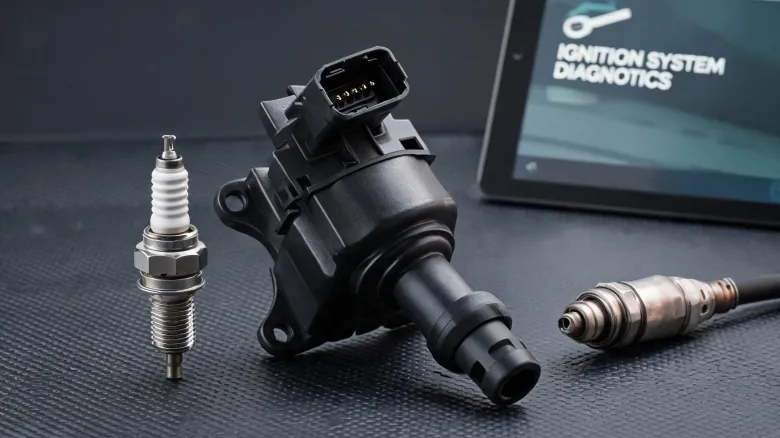
The company I work for is named Optimal, so you'd think I'd have an easy answer for what makes a part "optimal." I don't. At least, not the answer most people expect. An optimal product isn't the one with the tightest tolerance, the longest warranty, or the most expensive material. It's the part that matches the conditions it has to survive. Since 2019, I've personally made and documented 24 significant mistakes—roughly $52,000 in scrap, rework, and lost hours—and the common thread is always the same: I optimized one component while ignoring the system around it.
I'm a failure analyst at Optimal, where we make stamped automotive parts, custom dies, CNC machining, forgings, and aluminum extrusions for vehicle manufacturers and their suppliers. Because we work across so many processes, we get asked a lot of "basic" questions that turn out to be not so basic. What is the optimal thermostat setting in winter? Is an alternator charger really a charger? Should you coat piston skirts? What does an air filter actually do? This article answers those questions with the benefit of my own documented mistakes.
Optimal Thermostat Settings Winter? Two Different Answers
Search "optimal thermostat settings winter" and you usually land in home energy advice. There, the U.S. Department of Energy's widely cited target is 68°F while you're awake and lower whenever you're asleep or away. That's a reasonable baseline, though your comfort and heating system might justify something slightly different.
Vehicles are a different story. The optimal thermostat setting on a car isn't adjustable by season. Engine cooling systems are designed to keep coolant in the 195°F–220°F range, winter included. A thermostat isn't a valve for cabin comfort; it's what keeps the engine from dropping below operating temperature. If it opens too early—or someone installs a lower-temperature thermostat as a "winter trick"—the engine stays cold, the ECU enriches the fuel mixture, fuel economy drops, oil picks up condensation, and the heater struggles. That's not optimization. That's a fault.
People assume the thermostat controls how hot the engine gets. It actually controls how cold the engine is allowed to get. The distinction matters.
Why do I bring this up? Because Optimal machines thermostat housings and coolant flanges. In 2022, I signed off on a housing run after checking every critical dimension except the O-ring groove depth. The groove looked fine. It wasn't. Fourteen of 300 housings failed the final leak test—$4,200 in machining time went to scrap, and our customer lost a week they didn't have. The check I skipped would have taken five minutes with a depth gauge. Now it's the first line of my checklist.
What an "Alternator Charger" Actually Does
Calling an alternator a charger is a habit I'd like to break. In plain terms, an alternator is a belt-driven generator. Its real job is to supply current for the vehicle's electrical loads and replace the energy that was used to start the engine. It isn't designed to recover a deeply discharged battery by itself.
If a battery has been sitting for months, some people jump-start it and expect the alternator to do the rest. The alternator will try. It will also run hot, push high current for a long time, and shorten its own life—or the battery's. A dedicated bench charger is far cheaper than an alternator and a battery. I learned that after telling a fleet customer the alternator would handle it. It did, for about a week. Then it didn't.
From the manufacturing side, charging problems often trace back to mechanical alignment. Optimal machines and forges alternator mounting brackets. If the bracket's mounting face isn't flat, or if there's a worn pulley elsewhere on the belt path, the alternator sits at a slight angle. That produces belt noise, uneven pulley wear, and charging that flickers under load. A brand-new alternator bolted to an uncorrected bracket is still a charging problem. When you're chasing a "bad alternator," check the whole belt path before swapping the part.
Coating Piston Skirts? Yes, But Not as an Afterthought
Piston skirt coating gets treated by some builders as an upgrade you order like a phone case. It's not. A skirt coating is an engineered dry-film layer—usually graphite or molybdenum-based—applied in microns. We're talking roughly 10 to 20 micrometers, thinner than a human hair. It reduces friction between the skirt and the bore during cold starts and helps prevent scuffing. The benefit is real.
But here's something vendors won't tell you: the coating won't fix what's underneath it. If the piston-to-bore clearance is wrong, if the bore finish is too rough, or if the surface wasn't cleaned properly before coating, the coating will fail. And it usually doesn't fail quietly.
Optimal doesn't run a coating line. We do procure coated pistons for prototype engines and custom builds, which is how I got burned. In a 2023 lot, I approved coated pistons after a visual inspection. The parts looked flawless. The coating wasn't adhered correctly, and it separated on the thrust face during dyno testing. One engine started burning oil before we tore it down—and explained to the customer why parts we had approved failed. Because lot traceability couldn't clear the remaining pistons, we re-ran the entire batch. That cost about $6,500 and two weeks of schedule. A ten-minute adhesion test on a sample would have caught the problem.
If a supplier offers to coat piston skirts for you, ask what coating they're using, what thickness spec they're holding, how they verify adhesion, and what surface preparation they perform. If they treat it as a cosmetic extra, walk away.
What Is the Air Filter for in a Car? (And the Bypass Most People Miss)
The short answer: the engine air filter stops airborne particles from reaching the combustion chamber. Without it, dust acts like a lapping compound, wearing cylinder walls and piston rings until oil consumption rises and compression drops. It's a cheap guard protecting an expensive assembly.
The part most people miss is the seal. An air filter only filters the air that flows through it. If the element doesn't seal completely against the housing, or if the housing itself is warped, unfiltered air can find its way around the filter. You can replace the element on schedule and still let abrasives into the engine.
At Optimal, we stamp sheet-metal housings for heavy-duty intake systems. In one production run, our sealing flanges came out of the press with slightly inconsistent flatness because the incoming steel lot had different springback characteristics than the samples we validated. I had approved the process based on first articles; nobody checked sealing-face flatness after the first 50 pieces. Assemblers found a visible gap around part 140, and by then the whole suspect batch—about 300 housings—was quarantined. The scrap cost was $3,800, but the scarier part is what would have happened if they'd shipped: dirt bypassing the filter, no warning light, and engines wearing out a year or two early. Now we check flange flatness on a schedule, not just at launch.
When you replace a car air filter, run a finger along the gasket after seating it. If you see dust trails on the clean side of the housing, don't blame the filter—check the housing sealing surface.
What This Means When You're Buying Parts or Replacing Them
By now I hope the pattern is clear: optimal isn't a sticker, it's a match. The match has to happen on temperature, load, vibration, contamination, and budget. That's why the first question I ask now isn't "what's the best part?" It's "what's the worst condition this part will see?"
One honest caveat: the examples above come from a mid-sized manufacturer's own records, not from a trade association study. Your parts may face different operating conditions, and my failure numbers aren't universal failure rates. Treat them as questions to ask, not as a finish line. Which failure mode would hurt you most? How is the supplier verifying that it won't happen? If they answer only with marketing words, that's a red flag.
The real villain in most returns isn't the part—or rather, isn't only the part. It's the gap between how we think a component behaves and how it actually behaves in the system. The fix for that gap is boring: checklists, verification, and the occasional admission that you don't know what you don't know.
A five-minute verification is boring. A five-day correction is memorable. I already have enough memories.

Elise Novak
Elise Novak is an automotive braking systems analyst specializing in brake pads, discs, rotors, calipers, shoes, drums, hoses, and complete brake kits. She uses UN Regulation 90 requirements and ISO 26867 dynamometer methods to examine friction stability, fade and recovery, wear, disc thickness variation, runout, and hydraulic integrity. Her work helps distributors, quality teams, and fleet buyers compare replacement parts, verify application suitability, and define incoming-inspection criteria.