Optimal Is Not a Specification: A Quality Inspector's Perspective on Automotive Parts
Ask ten people for the optimal thermostat settings for a house and you'll get ten different answers. It depends on climate, insulation, schedule, and whether you're trying to save energy or keep a bedroom warm at night.
The optimal temperature for sourdough starter is often quoted around 74–78°F, but that number holds only if your flour and feeding routine match the assumption. Change the flour, and optimal moves. Put another way: optimal is a result, not a measurement.
At our company—the name is Optimal—we see the same word in a lot of part quotes. A customer sends a drawing for an automotive stamping and writes, "Make it optimal." Or they ask for "best quality" without defining the test. I'm a quality and compliance manager at an automotive parts manufacturer. I review roughly 200 unique part specifications a year, and I've rejected about 12% of first-run samples in the last 12 months because "optimal" was doing the work that a tolerance should do.
The surface problem: "Just make it optimal"
The surface problem is that many buyers treat "optimal" as a spec. It's not. It's an adjective with no boundary conditions. If I'm quoting a bracket and you say "make it optimal," I don't know whether you mean lightest, cheapest, strongest, easiest to weld, or best fatigue life. These goals often conflict. A lightweight bracket may need a higher-strength material. A stronger part may be heavier. An optimal solution depends on what you're optimizing for.
This isn't a procurement lecture. It's the difference between getting a part that works and getting a part that almost works. And "almost" is where the cost hides.
What "optimal" actually hides
1. Missing boundary conditions
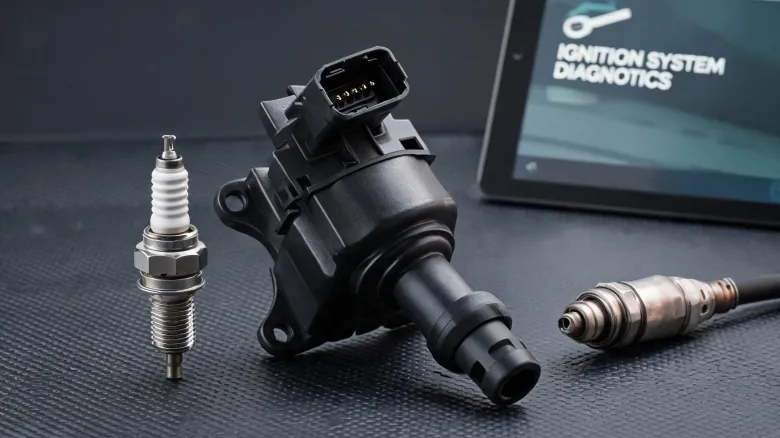
Take an industrial oxygen sensor. The sensor electronics might be excellent, but the mounting boss has to be flat, the thread class has to match, and the insertion depth has to put the sensing element in the right spot. If the stamped or machined bracket is off by 0.2 mm, the seal can leak or the sensor can read the wrong gas mixture. No amount of optimal in the spec fixes that. You need a flatness callout and a tolerance.
2. Tolerance stack-ups
An ignition coil wire connector is another classic. A connector can click onto the coil, feel secure, and still vibrate loose if the stamped terminal has a burr on the retention tang. Each individual dimension might be within print, but the stack-up across the terminal, the connector body, and the coil header can leave the tang riding on the edge of the lock. That's not a connector problem. It's a tolerance-stackup problem designed into the part because nobody defined the total assembled height.
The same logic applies to structural brackets, transmission mounting plates, battery trays, and almost anything we machine. A hole that is perfectly positioned but has a torn edge from a worn die will behave differently in assembly. "Optimal" doesn't catch that. A burr spec does.
3. Process specs instead of functional requirements
I see requests that say "must be CNC machined" when a stamped part might be stronger and cheaper. And I see "just stamp it" when the tolerance requires a secondary operation. A stamped part, a forged bracket, and an aluminum extrusion can sometimes perform the same function, but their fatigue behavior, cost profile, and tooling lead times are different. If the spec only says "strong enough," the supplier has to guess. If it says "must survive 500,000 cycles at 45 Nm without cracking," the process choice becomes an engineering decision.
Process is easier to write down than function, so people default to it. The risk is that you've made design decisions before you've defined the actual requirements. When you spec the function, the process becomes a choice. When you spec the process, you've already narrowed the design. Sometimes that's fine. But it's not optimal by default.
The cost of not defining "optimal"
In Q1 2024, we received a batch of 8,000 stamped brackets where the bend radius looked right but was actually below the material's minimum bend radius. The cracks didn't show up in a quick visual check. They showed up during assembly testing. The vendor claimed it was within industry standard. We rejected the batch, and they redid it at their cost. That issue caused a $22,000 rework and delayed the launch by a week.
The frustrating part? The drawing had no bend-radius minimum. The designer assumed a standard would apply. "Standard" was doing the same lazy work as "optimal."
Communication also breaks in less visible ways. I once told a production manager that a prototype run was "production-ready." They heard "we can use the prototype process at scale." When the 500th part didn't fit, we realized we'd been using the same words to mean different things. That preventable mismatch cost us two days of line time.
And I'll admit to an overconfidence failure of my own. I skipped the final verification on a small order because "we've made this same part for years." That was the one time the material supplier switched grades without telling us. The parts stayed within tolerance, but the surface finish was off enough to cause rework. Keeping a checklist isn't just for other people.
Honestly, I'm not sure why some buyers leave tolerance fields blank. My best guess is they think it slows down quoting. In reality, it slows everything down, because we have to ask questions or make assumptions that turn out to be wrong.
What works: prevention over cure
The solution isn't a longer spec sheet. It's a clearer one. These are the rules I come back to:
- Define the function, not just the dimensions. What is the part doing? What loads, temperatures, and fluids will it see? What does "works" look like?
- Put a tolerance on every critical feature. If you don't know, ask us. A conversation before tooling beats a non-conformance after production.
- Require first-article inspection. That one hour of measurement is the cheapest insurance you can buy. Skipping it to save time is how a 50,000-unit order becomes a $22,000 problem.
- Use a checklist. The 12-point checklist I created after my third mistake has saved us an estimated $8,000 in potential rework. Five minutes of verification beats five days of correction.
Per FTC Green Guides, a claim like "recyclable" must be substantiated (ftc.gov/green-guides). I think "optimal" deserves the same discipline. If we claim a part is optimized, we should be able to say what it's optimized for.
Even USPS understands this. Their Business Mail 101 rules define a letter by specific dimensions and a maximum thickness (usps.com/businessmail101). A 0.3-inch-thick envelope isn't a letter; it's a flat or a parcel. Likewise, a bracket that is 0.2 mm off in the right place isn't the same part. It might function in one assembly and fail in another.
So what is "optimal"?
Optimal is a process, not a parameter. It means you've identified the boundary conditions, measured the critical features, and verified the part works in its application. At least, that's been my experience with stamped and machined components for B2B automotive supply.
This worked for us, but our situation was a mid-size supplier with a rigid first-article process. If you're a low-volume prototype house or a high-speed commodity operation, the calculus might be different. The principle—define before you optimize—probably still applies.
And if you're a home mechanic looking up how to replace an air filter in a car, the same logic applies: make sure the filter seats evenly, check the locating tabs, and don't force it. A filter that looks right but sits at an angle will still let dust past. The difference is that at production volume, we verify that before it gets into the box.

Elise Novak
Elise Novak is an automotive braking systems analyst specializing in brake pads, discs, rotors, calipers, shoes, drums, hoses, and complete brake kits. She uses UN Regulation 90 requirements and ISO 26867 dynamometer methods to examine friction stability, fade and recovery, wear, disc thickness variation, runout, and hydraulic integrity. Her work helps distributors, quality teams, and fleet buyers compare replacement parts, verify application suitability, and define incoming-inspection criteria.