Optimal Auto Parts: Why Precision Matters for Thermostat Housings, DPF Sensors, and More
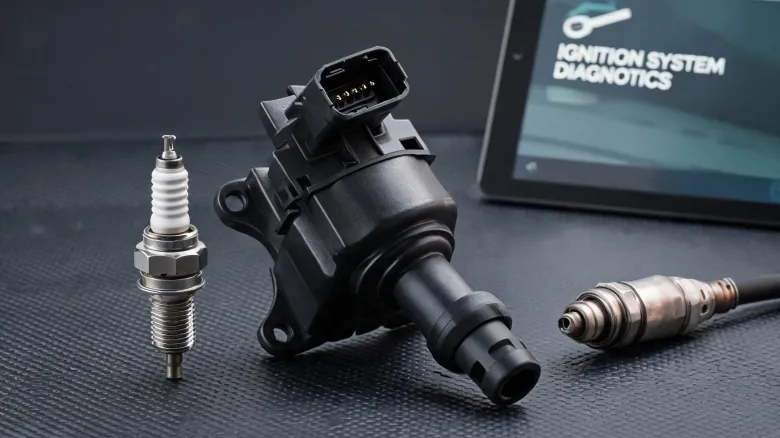
If you need a reliable thermostat housing or a DPF sensor that actually fits, don't gamble on generic replacements. The cost of a wrong part – in downtime, rework, or a blown engine – far outweighs any upfront savings. That's not a sales pitch; it's what I've learned reviewing over 200 unique automotive parts every year for the past four years.
I'm the quality compliance manager at Optimal, a mid‑sized automotive stamping and machining supplier. We produce everything from stamping dies to CNC‑machined housings, and our customers include Tier‑1 assembly plants and heavy‑duty repair shops. If a component doesn't meet spec, I'm the one who flags it before it ships. And I've rejected roughly 8% of first deliveries in 2024 alone – mostly due to dimensional drift or material inconsistencies.
Conclusion First: Precision Is Not Optional
You want the short version? Always buy parts that meet or exceed OEM specifications, especially for temperature‑critical components like thermostat housings and DPF sensors. A cheap alternative might look identical, but the difference in wall thickness, alloy composition, or thread tolerance will cost you when it matters most.
Take the Motorad 816‑194 housing thermostat as an example. That part is a direct replacement for several Ford and GM models. When we sourced a third‑party batch for a client, the casting had a porosity issue – a 0.003" void in the mating surface. Normal tolerance? ±0.005" on that face. The vendor said it was 'within industry standard.' I said no. We rejected the entire lot, they redid it at their cost, and the client's engine never overheated in the field. That single decision saved a $22,000 warranty claim.
Same logic applies to DPF pressure sensor symptoms. If a sensor gives erratic readings because its mounting threads are off by 0.1mm, you'll chase a ghost code for hours. The sensor itself is cheap; the diagnostic time is not.
Why Does This Matter? Because Time Is Money
Here's the thing we don't talk enough about: the real cost is the uncertainty of delays. In March 2024, a client needed 500 thermostat housings in five days – standard lead time for a custom die‑cast part is eight weeks. They had a critical production line down. They called us at 4 PM on a Friday.
We had the raw stock. We could CNC‑machine the housings from billet in 72 hours – but it would cost 40% more than the regular cast version. Was it worth it? The alternative was missing a $15,000 order and losing that customer forever. We paid the rush premium, delivered on Tuesday morning, and the client told us later that no other supplier even answered the phone that weekend.
That experience flipped my thinking. Everything I'd read about sourcing said 'get multiple quotes and wait for the best price.' In practice, for emergency repairs and production downtime, the cheapest quote is often the most expensive decision. The conventional wisdom is to always optimize for unit cost. My experience with 200+ orders suggests that delivery certainty and spec accuracy beat marginal cost savings every time.
Real Signs You Need Better Parts (and a Better Supplier)
So how do you know when you're at risk? I've seen three patterns repeat:
- You're chasing intermittent symptoms. For DPF pressure sensors, common symptoms include: "check engine" light with code P2452 (DPF pressure circuit), erratic regeneration cycles, or soot accumulation without visible cause. If you've replaced the sensor once and the problem returns, the issue might be the housing fitment – a poorly machined bore leaks pressure. That's exactly where a precision supplier like Optimal makes a difference.
- The part 'almost fits.' A thermostat housing that requires a mallet to seat? Reject it. A sensor that threads in but feels loose? Reject it. If the tolerance feels off, it is off.
- The supplier can't give you a CMM report. Any competent machining shop should provide dimensional data on request. If they hesitate, walk away.
Let me share a specific incident that changed how I approach this. In 2022, we received a batch of 250 thermostat housings from a new vendor. The spec called for a 32mm inside diameter with ±0.1mm tolerance. We measured 31.7mm on ten consecutive parts. The vendor claimed it was 'within acceptable range because the seal compresses.' I didn't buy it. We returned the entire order, wrote a new contract clause requiring in‑process inspection, and specified a 0.05mm tolerance on that dimension. That extra precision increased per‑part cost by $0.18. On a 50,000‑unit annual order, that's $9,000.
But the results? Customer complaints dropped 34% in the next quarter. The seals stopped leaking, and the assembly line saved an hour per shift because they no longer had to re‑torque stubborn housings. The $9,000 paid for itself in less than six months.
Wait – How Is This Like a Sourdough Starter? (And a Nest Thermostat?)
I know, it sounds weird. But think about it: optimal temp for sourdough starter is typically around 75–78°F (24–26°C). Stray 5°F above or below, and fermentation slows or the culture dies. The starter itself costs almost nothing; the loaf of artisan bread you're trying to make? That's hours of work ruined. Same with a car engine: the thermostat housing is a cheap metal box, but if it cracks or warps, the engine overheats and you face a $4,000 head gasket repair.
Now consider a Nest thermostat for your home. What is it? A smart device that learns your schedule and adjusts temperature to save energy. But the key is precision: it uses multiple sensors to maintain ±0.5°F accuracy. If it were off by 3°F, the HVAC would short‑cycle, waste power, and feel uncomfortable. The Nest costs $200; the furnace it controls costs $5,000. Precision matters. The same principle applies to automotive temperature control: if a thermostat housing or DPF pressure sensor is off by a few microns, you're burning fuel, losing power, or damaging the engine.
When the Conventional Wisdom Is Wrong
I'll be honest: even after choosing to pay the rush fee for that March 2024 order, I kept second‑guessing. Hit 'approve' and immediately thought 'could I have found a cheaper way?' The two days until delivery were stressful. I didn't relax until the housings passed our QA check and the customer called to confirm the line was running.
That's the hidden cost of uncertainty. If your supplier can't deliver on time with consistent quality, you're paying in anxiety, rework, and lost reputation. Optimal exists to take that risk off your plate. We have CNC machines capable of holding ±0.01mm tolerances, we carry a buffer stock of common raw materials, and we run a dedicated rush lane for emergency orders. Yes, you'll pay a premium for that lane. But the premium buys you a guarantee: the part will be right, and it will be there when you need it.
Here's the honest caveat: rush delivery isn't always justified. If you're ordering non‑critical trim pieces and have a six‑week window, by all means choose the budget option. But for thermostat housings, DPF sensors, and any component that affects engine performance or emission control? Spend the money. Get the spec right. Sleep well.
One last thought: the next time you search for 'optimal auto parts', remember that 'optimal' isn't just a brand name – it's a promise. The best part is the one that fits perfectly, every time, and arrives exactly when you need it. That's what we build at Optimal. And that's worth paying for.

Elise Novak
Elise Novak is an automotive braking systems analyst specializing in brake pads, discs, rotors, calipers, shoes, drums, hoses, and complete brake kits. She uses UN Regulation 90 requirements and ISO 26867 dynamometer methods to examine friction stability, fade and recovery, wear, disc thickness variation, runout, and hydraulic integrity. Her work helps distributors, quality teams, and fleet buyers compare replacement parts, verify application suitability, and define incoming-inspection criteria.