Optimal Auto Parts: 7 Cost-Driven Answers on Thermostats, Starters, Catalytic Converters, and the Flywheel Business Model
-
What are the optimal thermostat settings for winter?
-
Can a bad catalytic converter cause rough idle?
-
Why is a cheap small motor starter usually a money-loser?
-
Does the flywheel business model apply to auto parts procurement?
-
How do you compare quotes for optimal auto parts?
-
What should an RFQ include for optimal auto parts?
-
What's the first step for a rough idle that could be the catalytic converter?
I'm a procurement manager at an 80-person automotive parts company. I've managed our direct materials budget — about $320,000 a year — for 8 years, negotiated with 60+ vendors, and documented every order in our cost tracking system. This article is based on that paper trail, not a sales pitch.
Below are the questions that keep appearing in searches for optimal auto parts, answered from a purchasing angle. The short version: optimal is not the same as cheapest. I do not mean 'skip good quality.' I mean calculate the part's total cost before you sign.
- What are the optimal thermostat settings for winter?
- Can a bad catalytic converter cause rough idle?
- Why is a cheap small motor starter usually a money-loser?
- Does the flywheel business model apply to auto parts procurement?
- How do you compare quotes for optimal auto parts?
- What should an RFQ include for optimal auto parts?
- What's the first step for a rough idle that could be the catalytic converter?
What are the optimal thermostat settings for winter?
Searching 'optimal thermostat settings winter' actually gives you two different questions. If you mean your home thermostat, the U.S. Department of Energy says the recommended winter setting is 68°F while you're awake and 60-62°F when you're away or asleep. Turning it back 7-10°F for 8 hours can save about 10% a year on heating, according to energy.gov. That's for buildings, not engines.
For a car, there is no 'setting.' The engine thermostat is a mechanical valve with an opening temperature. Most OE thermostats open at roughly 190-200°F (88-93°C). In my experience, the optimal engine thermostat in winter is the one your powertrain was designed around — not a 'cold' aftermarket unit that keeps the engine under operating temperature. A colder thermostat can reduce fuel economy, cause rich fuel trims, and make the heater feel like it's blowing lukewarm air at idle.
If you're sourcing thermostats, specify the OEM temperature range. We once saved $1.80 per unit on an off-brand thermostat that opened 15°F too early. The shop had to replace 40 units and clear P0128 codes. That $72 savings turned into a $1,300 problem.
Can a bad catalytic converter cause rough idle?
Yes. A bad catalytic converter can cause rough idle, usually when the catalyst is partially blocked or broken down. The restriction creates exhaust backpressure that upsets the engine at idle, where there's very little energy to push gas through the plug. You might also smell sulfur, see weak acceleration, or get a P0420 code.
Under EPA OBD-II regulations, the engine computer runs a catalyst efficiency monitor and sets a generic P0420 when the converter drops below threshold. But that code doesn't tell you whether the cat is the cause or the victim — that's why diagnosis matters.
A 2023 file in our system stands out: a fleet customer ignored a P0420 for two months. By then, the converter was clogged enough to make the van stall at red lights. The $380 converter wasn't the problem — the two failed O2 sensors and the damaged exhaust section were. Total bill: $1,400.
I only learned to diagnose the converter first after ordering an $800 O2 sensor kit and rushing the install. The rough idle stayed. The code returned. That was a tuition payment nobody reimbursed.
If you are evaluating a converter supplier, include O2 sensor life and substrate certification in the total cost. Cheap cats often don't last, and labor is the real cost.
Why is a cheap small motor starter usually a money-loser?
I have mixed feelings about bargain small motor starters. On one hand, a $60 price tag is tempting. On the other, a starter that fails in a year costs more in labor than the premium part. It's not the unit price that matters; it's the cost per successful start.
If I remember correctly, our 2024 comparison covered four starter suppliers. Two met OE spec on paper. The cheap one had a 9% return rate; the better one was around 0.8%. We projected savings of $12,600 per 1,000 units, then paid $18,700 in warranty, rework, and expedited freight. That's a $6,100 loss before overhead.
That doesn't mean overpay for the brand name. It means compare a small motor starter using TCO: unit cost, failure rate, warranty labor, and test time. A remanufactured OE starter usually lands in the $120-180 range in major online catalogs as of March 2025 — verify current prices — and it's often a smarter buy for daily-use vehicles.
Does the flywheel business model apply to auto parts procurement?
The flywheel business model is usually described in SaaS webinars: small repeated wins compound into momentum. It sounds like a slide-deck cliché, but it maps well to auto parts sourcing.
Good parts create fewer returns. Fewer returns create less inspection time. Less inspection time creates room to vet better suppliers. Better suppliers deliver more consistent parts. That's a flywheel.
We run a scorecard for every core supplier: quality reject rate, on-time delivery, and TCO. After each quarter, the top suppliers get more volume. Their lead times improve because we're predictable. Their improved lead times help us quote faster. That's the flywheel business model in action.
This worked for us, but our situation is fairly stable. We have repeat production programs, not pocket change spot buys. If you're dealing with erratic demand or one-off projects, the flywheel stalls. Your mileage may vary.
How do you compare quotes for optimal auto parts?
'Optimal auto parts' stops being a keyword when you start adding tooling, logistics, and failure costs to the quote. I define optimal as the part that meets spec with the lowest predictable total cost.
When I audited our 2023 spending, I found that 22% of our cost overruns came from tooling communication gaps — not piece price. A bracket stamped to the drawing was fine, but nobody clarified who owns the die and who pays for die wear. That single ambiguity added $4,200 to a two-stage job.
That's why I value multi-process capability. A supplier that does stamping, custom die/mold build, CNC machining, forging, and aluminum extrusion can reduce handoff risk. If you need a die tweaked, there's no third-party waiting game. It doesn't have to be Optimal — but if a vendor has those capabilities in-house, they should score higher on your RFQ.
One caveat: multi-process shops can be more expensive on a single line-item. But when you calculate project management, shipping, and tolerances, they often win. This is one of those cases where the 'cheaper' quote is the illusion.
What should an RFQ include for optimal auto parts?
If you want apples-to-apples quotes, you have to remove ambiguity. This applies whether you're buying stampings, dies, CNC components, or forged parts. Use the RFQ as your checklist.
- 2D/3D part data with GD&T callouts and critical characteristics
- Annual volume and order release pattern
- Tooling ownership, die steel spec, and maintenance expectations
- Required certifications: IATF 16949, PPAP level, material test reports
- Surface treatment, packaging, labeling, and delivery terms
I was burned once by a low quote that didn't include the cost of replacing die inserts after 10,000 pieces. The piece price was 8% lower, but the insert replacement was an extra line item. When I compared six vendors using a TCO spreadsheet, the difference between the best and worst total was 19% — and the low bid was not the winner.
To be fair, that RFQ did not explicitly ask about die insert life. I own that mistake. Now every RFQ includes max production pieces per die service interval and steel grade. Simple policy, big savings.
What's the first step for a rough idle that could be the catalytic converter?
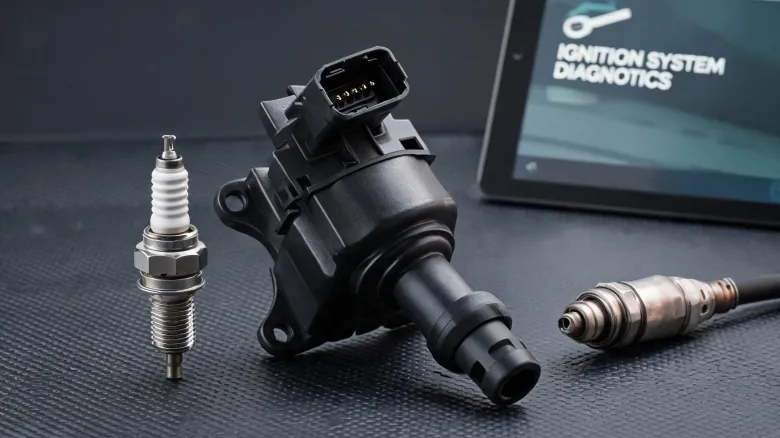
Wait — the question above said a bad cat can cause rough idle, but most rough idle codes are not the cat. In our shop, seven out of ten intermittent rough idle complaints turn out to be vacuum leaks, ignition coils, or old plugs. The catalytic converter is usually the victim, not the cause.
The first step is to read freeze-frame data and fuel trims, not to order a converter. If the code is P0420 and the car idles rough, check upstream O2 voltage and exhaust backpressure before replacing anything. That diagnostic hour is cheap compared to a $1,400 mistake.
The best parts buyer is the one who validates the problem first. That approach has probably saved us more than any vendor negotiation.

Elise Novak
Elise Novak is an automotive braking systems analyst specializing in brake pads, discs, rotors, calipers, shoes, drums, hoses, and complete brake kits. She uses UN Regulation 90 requirements and ISO 26867 dynamometer methods to examine friction stability, fade and recovery, wear, disc thickness variation, runout, and hydraulic integrity. Her work helps distributors, quality teams, and fleet buyers compare replacement parts, verify application suitability, and define incoming-inspection criteria.